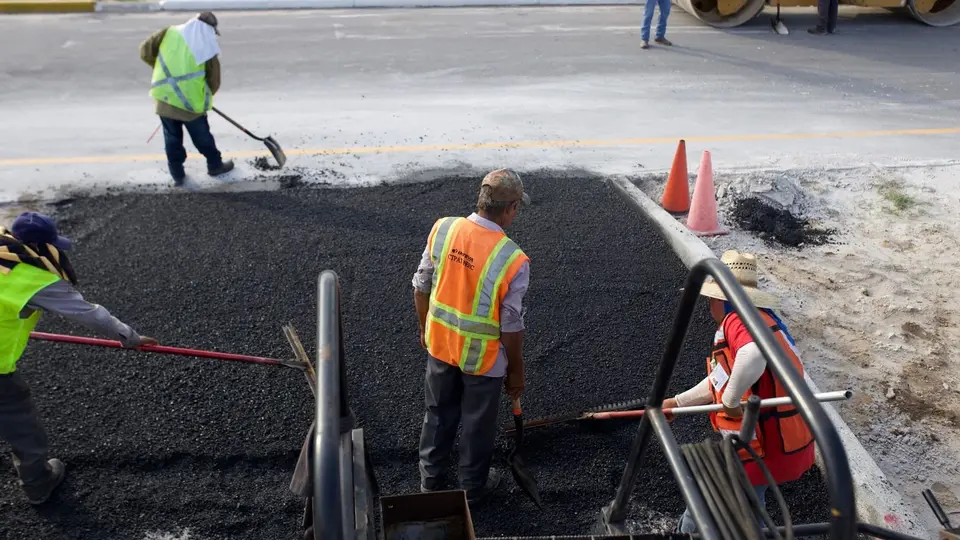
What "Replacement" Actually Means
Replacement means the old surface comes out and a new one goes down on ground that has been inspected and, where necessary, rebuilt. That second half is the part that matters and the part that varies. Two quotes can both say "replace the driveway" and describe genuinely different amounts of work below the surface.
It is worth separating from the two jobs it sits between. An overlay leaves the existing surface in place and lays new asphalt over it — cheaper, faster, and only correct when what is underneath is sound. A repair addresses a section rather than the whole drive. Replacement is what is left when the failure is general rather than local, and it is the only one of the three that gives anyone a look at the ground.
This page is about what happens once that decision is made — the sequence, how long it takes, and the points along the way where a homeowner actually has a say. If you are still deciding whether the drive needs replacing at all, the repair page walks through what each crack pattern means, and the cost guide covers the money.
The Sequence, Start to Finish
1. Demolition and haul-off
The old surface is broken up and removed from the property. On an asphalt drive this is usually quick. On concrete it is slower and heavier, and the debris volume is greater, which is why concrete removal carries its own line on a quote.
Ask where the material goes. Asphalt is recyclable and commonly is recycled; it is a reasonable question and a contractor who does this routinely will have a straightforward answer.
2. Excavation to grade
Once the surface is off, the ground is cut down to the depth the new section needs — the combined thickness of stone base and asphalt, plus whatever the design calls for. This is where a replacement stops being a surface job. The finished height has to work at both ends: flush at the garage, correct at the street, and pitched so water leaves.
3. The subgrade look — the one moment the job can honestly change
With everything stripped, the native soil is exposed for the first time. Around Cincinnati that soil is frequently heavy clay, and clay is the reason this step is not a formality. It holds water, and it changes volume as it takes water on and gives it up. Ground that moves seasonally is ground that needs more stone over it than sand would.
Sometimes the subgrade is fine and the job proceeds as quoted. Sometimes it is saturated, soft, or full of organic material that should not be built on, and it has to be dug out and replaced before anything else happens. Nobody can promise from the driveway's surface which of those it will be.
This is worth settling before work starts rather than during it. Ask what happens if the subgrade turns out to be poor: what the unit price for undercut and stone backfill is, who makes the call, and whether you will see it before it is covered. A contractor who has already thought about that question will answer it in one sentence. That conversation costs nothing in advance and is uncomfortable to have with a machine idling in your driveway.
4. Base
Graded aggregate goes down in lifts and is compacted. The depth is a specification, not a preference, and it should be a number on your quote rather than the word "standard".
Asphalt is flexible pavement. That is a structural description rather than a selling point: unlike a concrete slab, which spans and carries load across itself, an asphalt mat transmits load down into whatever is beneath it. It is only ever as strong as the layer under it. This is why how the section is built decides the lifespan far more than the thickness of the black part does.
5. Paving and compaction
Hot mix is placed and rolled while it is still hot enough to compact. The working window is real and short, which is why paving days are scheduled around weather and why crews do not stop halfway. On a slope the mix wants to move while it is hot, so laying and rolling on a grade is a slower, more deliberate sequence than the same work on a flat lot.
How Long You Are Without a Driveway
For a typical residential drive the physical work is usually a one- or two-day operation, and it is not the part that determines when you get your driveway back.
- Foot traffic: generally the same day, once the surface has cooled.
- Vehicles: commonly 2 to 3 days, longer in hot weather. New asphalt cools to the touch long before it has gained its final stiffness.
- Full cure: months, not days. Asphalt continues to harden well past the point where it feels finished.
Plan for the cars. If the drive is the only parking, arrange somewhere else for the week, and arrange it before the trucks arrive rather than the morning of.
The first hot summer
New asphalt is soft in its first season. Two habits cause most of the early damage people blame on workmanship: turning the wheel while stopped, which grinds a divot with the power steering, and parking something narrow and heavy on the same spot every day — a motorcycle kickstand, a trailer jack, a boat tongue. Both leave permanent marks in a surface that would have been fine a year later. A scrap of plywood under a jack stand solves the second one entirely.
Do not seal it yet
A new drive should not be sealed straight away. The surface needs time to release its lighter oils first, and sealing over that traps them. The usual guidance is to wait through the first full season before sealcoating. After that the maintenance schedule is what keeps the surface out of the replacement conversation for a long time.
Season and Weather in the Ohio Valley
Asphalt has to be hot to compact properly, which puts a practical shape on the calendar here. Spring through early autumn is the comfortable stretch. Late in the year the ground is colder, the mix loses heat faster on the way from the truck to the roller, and the working window narrows.
That is not a rule with a date attached, and any contractor telling you otherwise is simplifying. It does mean two practical things. Booking a replacement for the shoulder of the season leaves less room for a weather delay to move you past the point where the work should be done at all. And a job that gets postponed twice in November is often better postponed to spring than squeezed in — a mat that could not be compacted properly is a problem you will still have in five years.
The Parts People Forget to Ask About
The apron
Where the driveway meets the public right of way is frequently the jurisdiction's business rather than purely yours, and what that involves differs between the City of Cincinnati and the surrounding townships. It can add a line to the quote and a step to the schedule. Get it confirmed for your specific address before the work is booked, not after.
Drainage, especially on a hill
Water is the reason a lot of driveways get replaced twice. If the previous surface failed along one side or at the bottom of a slope, the drainage is the thing that failed, and laying new asphalt over the same arrangement buys you a repeat performance on the same schedule. The mechanism is covered on the paving page; what matters here is the timing.
A replacement is the only moment the edges are open and the grade can be changed. Once the new mat is down, fixing pitch or re-detailing an edge means cutting into work you just paid for. So the question to ask while the drive is still torn out is a specific one: where did the water go on the old surface, and what is different this time? If the answer is "nothing", you are buying the same driveway again.
Edges
An asphalt drive has no forms holding its sides. The edge is the most vulnerable part of the whole surface, and how it is finished and backfilled decides whether it crumbles in three years.
What is under the drive
Irrigation lines, invisible fencing, low-voltage lighting and downspout drains all tend to live exactly where a machine is about to dig. Mark what you know about before the crew arrives. Utility locates cover the utilities; they do not cover the sprinkler system a previous owner installed.
What a Replacement Quote Should Spell Out
- Compacted stone base depth and asphalt depth, as separate numbers. This is the single most common place two quotes stop describing the same job.
- Removal and disposal of the existing surface, priced as its own line, with the material named — asphalt and concrete are not the same removal.
- What happens if the subgrade is poor, at what unit price, and who decides.
- Where the water goes — pitch, edge detail, and any drainage work.
- The apron, and who is responsible for it.
- How long before you can drive on it, in writing, so nobody is guessing on the day.
A contractor comfortable putting the section on paper is telling you something useful before a machine moves. Ask for it in writing and compare the bids on the same terms.
Driveway replacement — FAQ
How long does replacing a driveway take? For a typical residential drive the physical work is commonly a one- or two-day operation. That is not the same as having the driveway back: foot traffic is generally fine the same day once the surface has cooled, vehicles usually 2 to 3 days and longer in hot weather, and the full cure runs months rather than days. Plan parking for the week before the trucks arrive rather than the morning of.
Can the price change once the work starts? It legitimately can, at exactly one point: when the old surface comes off and the native soil is exposed for the first time. Around Cincinnati that soil is frequently heavy clay, and if it turns out saturated or soft it has to be dug out and replaced before anything is built on it. Nobody can see that from the surface beforehand. Settle it in advance — ask what the unit price for undercut and stone backfill is, who makes the call, and whether you will see it before it is covered.
What is the difference between replacement and an overlay? An overlay leaves the existing surface in place and lays new asphalt over it. It is cheaper and faster, and it is only correct when the base underneath is genuinely sound. Replacement takes the old surface out and rebuilds on ground that has been inspected. Laid over a base that has already failed, an overlay cracks along the identical lines within a season or two — you paid for a surface and the surface was never the problem.
When can I seal a new driveway? Not straight away. A new surface needs time to release its lighter oils, and sealing over that traps them. The usual guidance is to wait through the first full season before sealcoating. After that a maintenance schedule is what keeps a driveway out of the replacement conversation for a long time.
Is there a time of year it should not be done? Asphalt has to be hot to compact properly, so spring through early autumn is the comfortable stretch in the Ohio Valley. Later in the year the ground is colder and the mix loses heat faster between the truck and the roller, which narrows the working window. There is no calendar date where it becomes impossible, but a job postponed twice into late season is often better moved to spring than squeezed in, because a mat that could not be compacted properly is a problem you still have in five years.
Do I need to do anything about the apron at the street? Possibly. Where a driveway meets the public right of way is frequently the jurisdiction's business rather than purely yours, and what that involves differs between the City of Cincinnati and the surrounding townships. It can add both a line to the quote and a step to the schedule, so it is worth confirming for your specific address before the work is booked.
Why did my new driveway get a dent from a kickstand? Because new asphalt is soft through its first season. Anything narrow and heavy left in the same spot concentrates load into a small footprint — a motorcycle kickstand, a trailer jack, a boat tongue. Turning the steering wheel while stopped does the same thing in a different shape. Both leave permanent marks in a surface that would have shrugged them off a year later. A scrap of plywood under a jack stand prevents it entirely.
More on paving in Cincinnati
Request a free written quote
Tell us the address and what you are looking to have done. Ask for the quote in writing with the thickness and the base work spelled out, so you can compare bids on the same terms.
Prefer to talk it through? Call (513) 586-4731.